How to use GGBS efficiently
Ground Granulated Blast Furnace Slag (GGBS) has become a familiar and valuable constituent of UK concrete. This is due to its ability to enhance durability and long-term performance, while significantly reducing embodied carbon through the displacement of Portland cement.
Like all resources, however, GGBS should be used efficiently. Efficient use does not mean avoiding GGBS, nor does it mean maximising its proportion in every mix. Instead, it requires a more considered approach to specification and use —one that focuses on performance, whole-life outcomes and appropriate application.
Guidance
 |
What is GGBS?
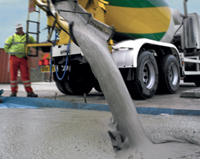
Ground Granulated Blast-furnace Slag (GGBS) is a familiar and valuable constituent in concrete as a cementitious material. Find out more about it and how it affects concrete properties.
Find out more
|
 |
CQ Application: How to use GGBS efficiently in concrete
Noushin Khosravi describes how informed specification can help to maximise the value of this low-carbon cementitious material, ensuring that it is used where it delivers the greatest benefit.
Find out more
|
 |
Specifying Sustainable Concrete: Supplementary Cementitious Materials
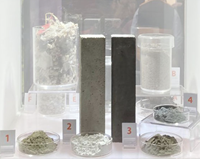
Supplementary cementitious materials (SCMs) are materials that may be used as part of the binder in concrete. This document introduces SCMs and some alternative binder technologies.
Download now
|
 |
Material Efficiency Design Guide
Minimising the production of waste is an important factor in material resource efficiency. This document provides information on the material and resource efficiency of concrete and masonry at each stage of their manufacture, design, construction and demolition.
Download now
|
Webinars
 |
The changing face of supplementary cementitious materials
Supplementary cementitious materials (SCMs) are an established way of reducing the embodied carbon of concrete in manufacture today but the availability, use and standards related to their use is evolving.
Watch now
|
 |
Concrete in Practice: Reducing carbon emissions at Bristol’s Temple Quarter
This event focuses on how early collaboration in the design stage and engagement with supply chain partners is enabling Temple Quarter Enterprise Campus to achieve a 25% reduction in embodied carbon.
Watch now
|
 |
Developments in specifying lower carbon concretes
There are many opportunities to cut carbon when specifying concrete, including adopting the optimal specification route for each project, refining the performance criteria and incorporating lower carbon additions.
Watch now
|
Projects
 |
Sidcup Storyteller
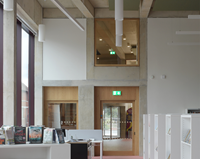
At Sidcup Storyteller, the efficient use of GGBS supported a light-coloured exposed concrete finish that performs multiple roles — structural, acoustic and architectural.
Read more
|
 |
Colne Valley Viaduct
At the Colne Valley Viaduct, reducing embodied carbon wasn’t driven by a single product choice, but by joined-up thinking from outline design through to construction. The project team optimised the amount of material used, removed finishes where possible, and took advantage of the inherent durability of concrete, complemented with the efficient use of GGBS.
Read more
|
 |
Emmanuel College
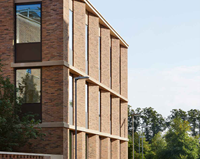
Emmanuel College had ambitious carbon targets for the project, with structural engineer Smith and Wallwork charged with assessing embodied carbon at every RIBA stage. In addition to utilising material efficiently, embodied carbon was further reduced through the use of 50% GGBS in the structural concrete.
Read more
|
 |
Salvation Army HQ
High levels of GGBS and a lean ribbed-slab structure have helped to reduced embodied carbon by 30% at Tatehindle’s admirably restrained HQ for the Salvation Army, writes Tony Whitehead.
Read more
|
FAQs
GGBS has a range of benefits when used in concrete including:
- Lower early-age temperature rise, reducing the risk of thermal cracking in large pours
- Minimizes the risk of Alkali Silica Reaction
- High resistance to chloride ingress, reducing the risk of steel reinforcement corrosion
- High resistance to attack by sulphates and other chemicals
- Better workability, making placing and compaction easier
- Off-white colour
- Reduction of carbon footprint
As GGBS replaces a proportion of the carbon-intensive clinker within concrete, it lowers the carbon footprint of concrete. However, since the 1980s, the average proportion of GGBS used in concrete has not changed due to the increased awareness about decarbonisation.
There is currently no direct replacement for GGBS that gives the same performance at the same carbon reduction. Moving away from GGBS before new technologies are available or standardised will result in embodied carbon of UK construction increasing in the short term.
GGBS is produced by grinding granulated blast furnace slag (GBS), a co-product of blast furnaces that produce iron for steel production.
Until recently, the UK had four operational blast furnaces producing iron (for steel production) and GBS. In 2024 the two blast furnaces at Port Talbot ceased operations.
There are now two remaining operational blast furnaces at Scunthorpe. This has prompted concerns about whether there is enough GGBS available to meet demand and whether importing GGBS is reliable since changes in the global market can affect availability and pricing.
Before the closure of the UK blast furnaces, GBS and GGBS were both imported and exported as part of global trade, now both are only imported to meet market demands.
Although the MPA is not able to collect specific figures, due to competition law, combined data shows the use of GGBS and fly ash in the UK is currently steady (Mineral Products Association, 2026).
In addition, MPA members report anecdotally that there is currently no shortage in availability as needs are being met through import. GGBS is able to be supplied through many plants across the UK, and the producers have indicated they have long term supply contracts in place. There will however be regional differences in availability based on local supply chains.
Therefore, considering the current and historic demand and current forecast of needs in the UK, there is no prospect of shortage any time soon.
There is little public data on the availability globally, and some of it appears contradictory.
The ‘efficient use of GGBS’ paper published by The Institution of Structural Engineers, Climate Group, The Concrete Centre and the UK Low Carbon Concrete Group did not identify a shortage of GGBS globally. It did state that it is almost fully utilised and that it should continue to be fully utilised.
Using more, or less, GGBS in the UK is likely to have little effect on global availability. This is because the UK is a relatively small user of GGBS on the global scale.
The latest figures from MPA Cement showed that the UK used around 2.5 million tonnes of GGBS and fly ash combined in concrete in 2024. The ‘efficient use of GGBS’ paper estimated that global production was in the region of 330-407 million tonnes. Therefore, the UK currently uses approximately 0.6-0.7% of the global supply.
In addition, the UK is particularly set up to use GGBS efficiently as:
- The UK has the grinding capacity to produce GGBS optimised for use in concrete, which many countries do not have, and
- the codes in the UK are particularly tailored to support the efficient use of GGBS in concrete (due to the historic supply), which is not the case in all other countries.
Therefore, it is not currently practical for all countries to use GGBS in concrete the way we do in the UK. Any use must be considered at a local level; the proportion the producer is offering, and what effect increasing the proportion above that will have on their stocks. This can only be understood by discussing this with suppliers at the early stage.
There are applications which require the specification of GGBS for its technical properties which can enhance the long-term strength and durability of concrete, such as in aggressive ground or to resist the ingress of chlorides. However, specifiers should avoid specifying particular cements or combinations. This should be addressed through specifying the required exposure class in accordance with BS 8500-1.
Instead of specifying GGBS to reduce carbon, it is more appropriate to specify a carbon range or limit for the concrete than to specify specific proportions of individual constituents.
No. Where the use of GGBS is needed to meet technical requirements, this should be specified using the appropriate combined performance categories in BS 8500-1. This allows a range of cements or combinations to be used that can meet that performance. Specifiers should avoid specifying particular cements or combinations, as most concrete plants will not stock all cementitious materials. Also, not restricting cement types will also allow suppliers to provide the lowest carbon option.
Additional restrictions on the maximum proportion of GGBS permitted to utilise a ‘fair share’ uses GGBS inefficiently. This is because its use in small proportions (e.g. 20-25%) will not bring any significant benefit in either carbon emissions or durability performance and the material could be better used in different applications. GGBS is most efficiently used at replacement levels of around 35–55%. At low levels of replacement other SCMs such as fly ash, calcined clay or silica fume provide better durability performance.
A more effective approach is to set a carbon target for the concrete package as a whole. This allows higher GGBS contents to be used where they deliver the greatest technical and environmental benefit, while avoiding its use where it is less suitable, or deliver fewer benefits.
No. If you are offered concrete that uses GGBS from a supplier, it is because they have it available and it is an effective way to meet your specification.
While there is currently no shortage in availability of GGBS in the UK, it is a valuable material and should be used efficiently.
The first step is to optimise the concrete design to minimise the overall quantity required. Specifying a carbon target, rather than a particular cement type, allows the supply chain to deliver the most efficient solution. Early engagement with concrete suppliers can also help determine what is appropriate for the project. The Concrete Centre produces a range of resources to support the efficient design and sustainable specification of concrete, including Specifying Sustainable Concrete: Embodied carbon.
Combining GGBS with other supplementary materials, such as limestone fines or calcined clay, can achieve comparable strength, carbon, and durability performance to a purely GGBS mix. However, the final design should be confirmed with the designer and concrete supplier on a case-by-case basis.
No. Availability of GGBS on the global market is already indirectly factored into the carbon accounting and the carbon factors used for GGBS; as a co-product in blast furnace steel production, according to BS EN 15804, the method of impact allocation used in calculating the embodied carbon of GGBS is based on its economic value, which increases as the demand and use of GGBS increases.
The carbon factors for concrete should not be manipulated outside of the rules defined by BS EN 15804 and BS EN 16757 the Product category rules for concrete. These rules have been developed to ensure consistency and transparency in carbon reporting both within product categories and between them.
Carbon accounting for projects should be carried out in accordance with BS EN 15978, with additional requirements coming from complementary standards such as the RICS Whole Life Carbon Professional Statement, where necessary. These standards set the boundaries and rules to be applied consistently across projects, making it easier to understand and interpret the results. They do not attempt to quantify the global impacts of a project, which would require a different calculation method.
 Back to Concrete Compass main page