Concrete Compass: Lower carbon concrete
Navigating to useful resources and guidance
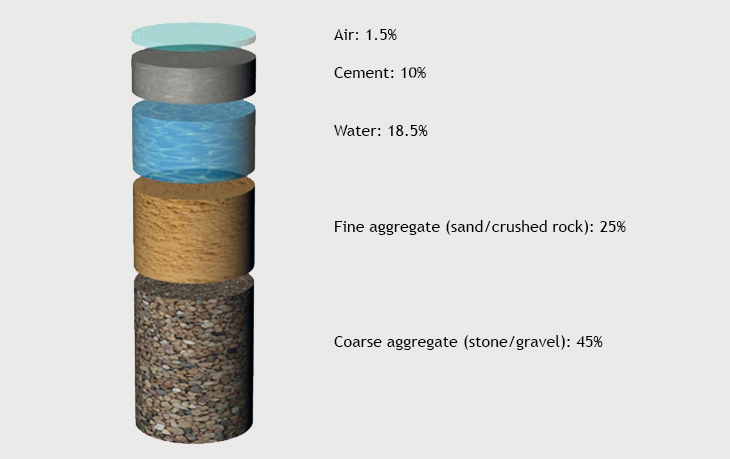
Concrete is a highly versatile material that offers designers the opportunity to develop low carbon solutions. Its performance and local availability has resulted in it being the second most consumed material globally (after water). As such, lower carbon concrete is becoming an increasingly important consideration in the design and construction of buildings and infrastructure. Reducing embodied carbon can be achieved through a combination of material selection, efficient design and appropriate specification, while continuing to deliver the performance, durability and resilience required throughout a structure's life.
There is no single solution to specifying lower carbon concrete. Instead, it requires a considered approach that balances embodied carbon with structural performance, availability, programme and whole-life outcomes. This Concrete Compass brings together guidance, tools, datasets, webinars and case studies to help designers and specifiers make informed decisions when selecting and using lower carbon concrete.
Low embodied carbon constituents
As shown in the figure above, the majority of the volume of concrete is aggregates, which are low in embodied carbon. However, the relatively small cementitious component - which can be Portland cement (CEM I) or secondary cementitious materials, such as GGBS, FA or limestone – account for the majority of the embodied carbon. Secondary cementitious materials have a lower embodied carbon and can be used in combination with CEM I, as permitted in BS 8500. More guidance on supplementary cementitious materials is available here: Specifying Sustainable Concrete: Cements
In The changing face of supplementary cementitious materials (SCMs) webinar (2025), Gareth Wake shares new opportunities and recent initiatives for greater and alternative uses of limestone, calcined clays, recycled concrete fines and stock-piled fly ash.
Lower embodied carbon concrete
Concrete is a unique material in that the specifier has the ability to directly influence the constituent parts of the mix to ensure an optimum carbon footprint that meets performance criteria and addresses the design imperatives of resource and energy efficiency within a whole life context, that also address the precepts of a circular economy.
- How low can we go? (Concrete Futures 2026). This article explores the many technologies that available to reduce the embodied carbon of concrete right now – and those that are on the horizon.
- BS 8500 - In 2023, the latest revision to BS 8500, the British Standard for specifying concrete, was released. The new version of the standard has incorporated multi-component cements, which has increased the range of lower carbon concretes available to specify. Specifying Sustainable Concrete: BS 8500 gives a brief overview of the methods of concrete specification using BS EN 206 and BS 8500, and how the method selected may impact the embodied carbon of the concrete. And How to: BS 8500 helps designers prepare specifications to BS 8500 for structures.
- TCC-BS 8500 software tool - TCC-BS 8500 Tool simplifies the specification of concrete to BS 8500 by allowing the user to input the exposure classes, design strength and cover. The spreadsheet then highlights the limiting values required to satisfy the durability requirements for given cement types. The spreadsheet also provides a carbon calculator, providing indicative carbon figures based on the cement type and limiting values.
- Specifying Sustainable Concrete: Embodied carbon - As embodied carbon is not included in BS 8500-1:2023, this guide has been written to help specifiers incorporate embodied carbon in their specification, alongside other performance requirements. It covers how to use the available tools and data to agree an appropriate embodied carbon performance and how this can be incorporated into the specification.
- Embodied carbon of concrete – Market Benchmark – Working with the LCCG, The Concrete Centre have published the Market Benchmark to help understand the baseline for embodied carbon of concrete in the UK. Through publishing this data, designers and specifiers have a better understanding of how to define lower carbon concrete for their application.
- Embodied carbon values for cement and concrete products - The Mineral Products Association (MPA) has developed several sector EPDs for cement and concrete, based upon data aggregated from its members. This factsheet presents the embodied carbon values calculated in MPA sector EPDs for cement, ready-mixed concrete, masonry concrete blocks, precast concrete flooring and precast concrete cladding and sandwich panels.
There are many opportunities to make carbon savings throughout the design and specification of a concrete frame. The embodied carbon of a structure can be reduced through the structural design, by focussing on lean design and dematerialisation, this is covered in our Material Efficiency Compass. In this Webinar: Design and specification interventions to save carbon using concrete (2025) speakers share their experiences of working with project teams and clients to achieve carbon reductions through specification and design interventions on a wide range of schemes.
Lowest whole life carbon
In addition to embodied carbon and operational carbon, designers need to consider the total, whole-life carbon. Whole-life carbon emissions are the most holistic measure of the total impact of our built environment and can help to avoid unintended consequences of focusing on embodied or operational carbon alone. A methodology for determining whole-life carbon is set out in EN 15978:2011 Sustainability of Construction Works. An explanation of the terminology and units associated with the measurement and reporting of carbon emissions associated with construction products and buildings is covered in this Webinar: Carbon terminology explained (2023)
To assist with whole-life assessment and design of concrete buildings, The Concrete Centre has published a guide entitled Whole-Life Carbon and Buildings, which sets out the specific qualities of concrete construction that can be used to help minimise carbon impacts including:
- Operational energy - using the thermal mass provided by concrete to lower operational emissions.
- Designing for long life - the longevity of concrete allows a building’s useful life to be extended; a key tenet of whole-life thinking and a circular economy.
- Reuse and adaptability - reducing whole-life CO2 through the ability to reuse concrete structures.
- End-of-life - the absorption of CO2 into concrete through the natural process of carbonation.
Decarbonising cement and concrete
In 2020, the UK concrete and cement industry published the Roadmap to Beyond Net Zero by 2050 which provides a viable route that uses seven key decarbonisation technology levers to go beyond net zero.
These levers include decarbonised electricity and transport networks, fuel switching, greater use of low-carbon cements and concretes (as described above), as well as advanced carbon capture technology. Many of these levers are already proven technologies, while others will require collaboration and input from more than one industry. Most will need to be supported by local and central Government over the long term, and critically all will require concerted action and investment.
A progress report was published in 2025 (based on 2023 data) which reported that the UK concrete and cement sector has cut carbon emissions by more than 63% since 1990.
The UK concrete industry reports annually on a range of sustainability indicators as part of the Concrete Industry Sustainable Construction Strategy which can be found at www.sustainableconcrete.org.uk.
 Back to Concrete Compass main page