Sustainability Series
Week 1: Saving carbon through design
Welcome to Week 1
There are a multitude of ways that we can save carbon through design and to kick off our 2026 Sustainability Series, the focus will be on showcasing case studies and methods for achieving carbon savings using concrete.
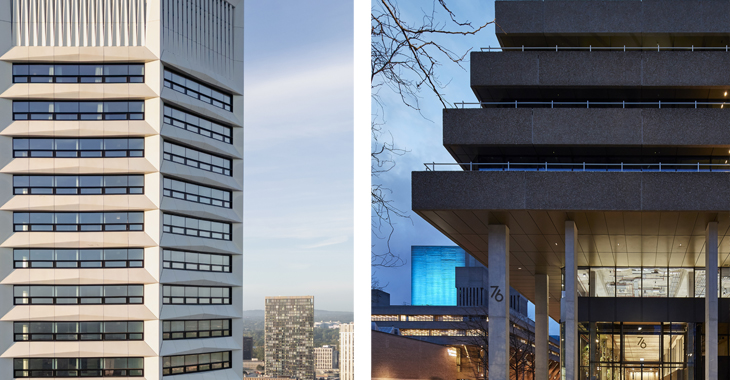
A highlight of the week will be our in-person 'Sustainability in Practice: Inspiring Projects, Practical Insights' event on Thursday 24th September in London. I'm looking forward to hearing more about two fascinating projects - The Octagon - an ambitious new build in Birmingham - and 76 Southbank - the repurposing of an iconic London building. The event is also an opportunity to catch up with colleagues across the industry so I hope to see you there.
As designers, we should be looking for opportunities to save carbon throughout the lifecycle of the project. Reducing upfront carbon can be achieved through specifying lower carbon concrete – our focus for Week 2 of the Sustainability Series – and through material efficient design. The approach to improving material efficiency – and saving carbon – will depend on the construction method selected. A new bitesize webinar highlights how designers can reduce carbon using precast concrete.
Saving carbon during the operation of a building should also be a key driver for design. Examples of how this can be achieved in housing are highlighted below – with many of the principles being relevant to other building typologies. Finally we need to think about end of life and Week 4 of the Sustainability Series will focus on circular principles, highlighting different options for reusing and recycling concrete buildings and structures.
The Concrete Centre has a wealth of resources to assist with lower carbon designs and I have signposted some key resources below to help you save carbon in your concrete projects.
Emily Halliwell, Senior Structural Engineer, MPA The Concrete Centre
___________________________________________________________________________________
Sustainability in Practice - Inspiring projects, practical insights (in-person)
Date: Thursday 24 September 2026
Time: 18:00 - 21:00
Venue: Royal College of Physicians, 11 St Andrews Place, Regent's Park, London NW1 4LE
Hear from Dav Bansal, Partner at Howells on Birmingham's tallest building, The Octagon, and Stefan Rust, Associate Director at Allford Hall Monaghan Morris, alongside Andrew Middlebrook, Director at Heyne Tillett Steel, on the reuse and restoration of Denys Lasdun's 76 Southbank. The event will also feature a presentation by Andrea Charlson, The Concrete Centre’s Head of Sustainability, on the latest carbon data for concrete.

___________________________________________________________________________________
Spotlight on: Improving material efficiency
The material efficiency of concrete frames can be improved by refining design criteria, such as loading and layout, selecting the most appropriate frame type and optimising the design. Concrete offers a wide range of construction and frame options, with some offering particular advantages when looking to reducing the quantity of materials used. Ribbed and waffle slabs are deeper than flat slabs, but the voids within them offer significant concrete and steel savings. Post-tensioning concrete is another option, improving the efficiency of the concrete structure and enabling material savings. Finally precast elements offer benefits due to their efficient, factory manufacturing and a range of other benefits signposted in this new guide, Decarbonising precast concrete through design, published in early 2026.
___________________________________________________________________________________
Spotlight on: Saving carbon with precast concrete
Offsite Concrete Construction offers a unique range of benefits for designers looking for a sustainable and material efficient option for their building or structure. To maximise the benefits it is essential that the manufacturing and installation process is understood by the design team and this new guidance and bitesize webinar from The Concrete Centre is available to support early, informed conversations between project teams and precast concrete manufacturers. Early collaboration helps to align design ambitions with manufacturing processes and to more effectively realise opportunities for carbon reduction and material efficiency.
___________________________________________________________________________________
Spotlight on: Delivering energy efficient masonry housing
The Future Homes Standard will come into effect in March 2027 and has the potential to transform the design of masonry housing. Utilising thermal mass, improving airtightness and avoiding thermal bridges are all key to improving the energy efficiency of a building. With the Home Energy Model (HEM) replacing SAP and a drive towards using air-source heat pumps and solar power, the design of housing will need to evolve to implement new approaches. Our recent Concrete Futures article, 'The look of living' delves in to what to expect from the next generation of housing. For more guidance on energy efficient buildings, visit the Energy efficient buildings Compass.
___________________________________________________________________________________
Spotlight on: Carbon comparisons
To achieve the greatest carbon reductions, assessing the whole life carbon of a project or scheme is key. To assist with this, The Concrete Centre has a range of resources to help with carrying out carbon comparisons at different stages. Concrete Frames Explained introduces the range of concrete frame types available and gives guidance on developing material efficient, lower carbon designs. For more detailed comparisons of carbon, our free Concept tool enables you to quickly assess a wide number of frame options, providing cost, carbon and construction time comparisons.